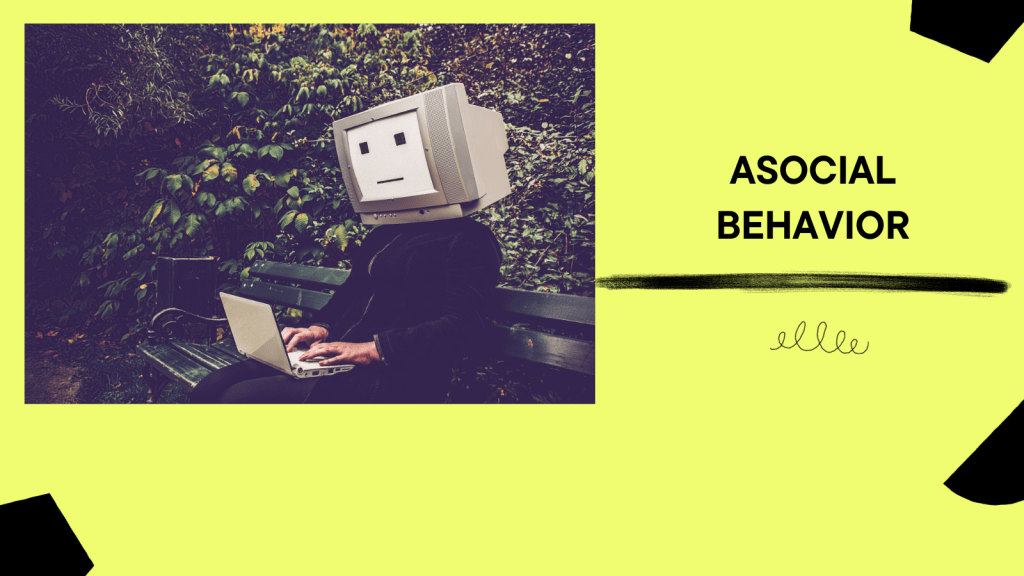
In a world filled with social media, networking events, and constant social interactions, it’s easy to assume that everyone is naturally inclined to be social. However, that’s not always the case. Some individuals exhibit asocial behavior, which is often misunderstood or misconstrued. In this brief blog post, we’ll take a closer look at what it means to be asocial and how it differs from being antisocial or simply introverted.
Defining Asocial Behavior:

Asocial behavior refers to a pattern of behavior characterized by a preference for solitude and a lack of interest in social interactions. People who are asocial may choose to spend a significant amount of time alone and may not actively seek out social connections. It’s important to note that being asocial is not the same as being antisocial, which involves hostility and disregard for social norms.
Characteristics of Asocial Behavior:
- Introversion: Asocial individuals often lean towards introversion, where they find solitary activities more fulfilling and energizing than social interactions.
- Limited Social Engagement: They may have a smaller social circle and prefer spending time alone or with a few close friends or family members.
- Independence: Asocial individuals tend to value their independence and autonomy, which can lead them to avoid social obligations or commitments.
- Preference for Solitude: Solitary activities such as reading, writing, hobbies, or simply being in nature may be more appealing to asocial individuals than group activities.
- Not Necessarily Anti-Social: Importantly, being asocial does not imply hostility or a disregard for societal norms and rules, as is the case with antisocial behavior or antisocial personality disorder.
Understanding the Spectrum:
It’s important to recognize that human behavior exists on a spectrum. Some people are naturally extroverted, thriving in social settings, while others are introverted, preferring quiet and solitude. Asocial behavior falls somewhere on this spectrum, with individuals leaning more toward solitude and less toward active social engagement.
Respecting Individual Differences:
While society often values extroversion and sociability, it’s essential to respect and accept individual differences in social behavior. Some people are genuinely content and fulfilled by their asocial tendencies. They may find solace and creativity in their solitude, and that’s perfectly okay.
Asocial vs. Antisocial:
While “asocial” refers to a preference for solitude or limited interest in social interactions, “antisocial” (as discussed earlier) is a personality disorder characterized by a pattern of disregard for the rights of others, impulsivity, manipulation, and a lack of empathy. The two terms are distinct in meaning and should not be confused.
Example:
Imagine Anu, a quiet and introspective adult who prefers spending her weekends reading books or pursuing artistic hobbies rather than attending parties or social gatherings. She enjoys her own company and feels recharged after spending time alone. Anu’s asocial behavior does not stem from a dislike of people or a desire to harm them, but rather from her natural inclination to seek solitude and introspection.
In this example, Anu’s choice to be asocial is not indicative of a personality disorder or a negative attitude towards others. It’s simply her personal preference to engage in solitary activities, highlighting that asocial behavior is a matter of individual choice and comfort rather than a pathology.

In conclusion, asocial behavior is a valid and natural part of human diversity. It’s important to note that being asocial is not inherently a mental health disorder or problematic behavior. Understanding and respecting the preferences and choices of individuals who lean towards asocial behavior can help foster a more inclusive and accepting society. So, whether you’re a social butterfly or someone who appreciates the peace of solitude, remember that there’s no one-size-fits-all when it comes to human interactions.
 YOGA's Blog
Leave a comment