Differentiating between sadness and clinical depression
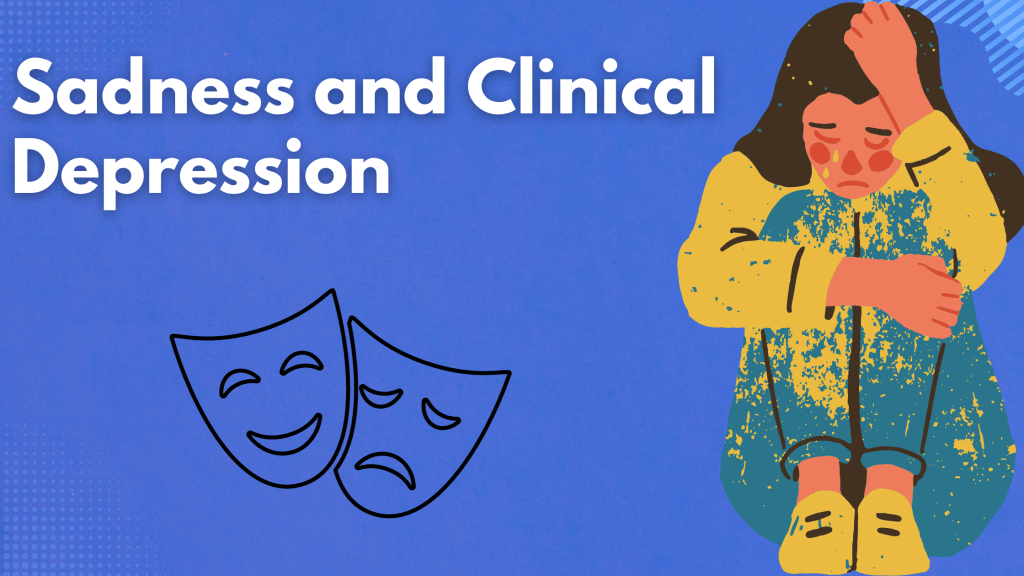
“You don’t have to be positive all the time. It’s perfectly okay to feel sad, angry, annoyed, frustrated, scared, or anxious. Having feelings doesn’t make you a negative person. It makes you human.” – Lori Deschene
Sadness and clinical depression are related but distinct emotional states.
Sadness is a normal human emotion that everyone experiences from time to time. It’s often triggered by specific events or circumstances and tends to lessen over time.
Clinical depression, on the other hand, is a mental health disorder characterized by persistent feelings of sadness, hopelessness, and a loss of interest in activities. It often doesn’t have a clear external cause and can last for weeks, months, or even years.
Key differences between sadness and clinical depression include:
Duration: Sadness is usually temporary and linked to a specific event, while clinical depression persists for an extended period, typically at least two weeks.
Intensity: Clinical depression is often more intense and overwhelming than ordinary sadness.
Physical symptoms: Depression can manifest physically with symptoms like changes in appetite, sleep disturbances, fatigue, and aches and pains, which are less common with regular sadness.
Impact on daily life: Depression can significantly interfere with daily functioning, making it challenging to work, socialize, or engage in usual activities.
Recurrence: Depression tends to recur, while sadness is usually tied to specific circumstances and fades as those circumstances change.
Professional diagnosis: Clinical depression requires a diagnosis from a mental health professional, whereas sadness is a common human emotion.
“You don’t have to control your thoughts. You just have to stop letting them control you.” – Dan Millman
If you or someone you know is experiencing symptoms of clinical depression, it’s essential to seek help from a mental health professional for an accurate diagnosis and appropriate treatment.


 YOGA's Blog
Leave a comment